
Beyond the Scale: How Sugar Quietly Sabotages Your Entire Body
When patients come to our office concerned about their sugar intake, the conversation usually starts with weight. "I know sugar makes me gain weight," they'll say, "but I just can't seem to cut back." What many don't realize is that sugar's impact extends far beyond the number on the scale—it's quietly orchestrating a cascade of physiological changes that affect virtually every system in your body.
The Sugar Storm: What Happens Inside Your Body
Picture this: you've just enjoyed a sweet treat or high starch snack. Within minutes, glucose floods your bloodstream like a sudden downpour. Your pancreas scrambles to produce insulin—think of it as your body's emergency response team—to shuttle this sugar into your cells. But here's where things get complicated.
Your Blood Sugar Rollercoaster
When blood sugar spikes rapidly, your body often overcompensates. Insulin levels surge, pushing blood sugar too low, leaving you tired, irritable, and craving more sugar. This isn't a character flaw—it's biochemistry. You're literally riding a hormonal rollercoaster that hijacks your energy, mood, and decision-making abilities throughout the day.
This happens because your body's natural regulatory systems are simply overwhelmed by the sugar overload of modern life. Our bodies evolved to handle the occasional piece of fruit or bit of honey, not the 150+ pounds of sugar and refined carbohydrates the average person consumes annually.
Over time, your cells can become resistant to insulin's message, like a fire alarm that's been going off so long you've learned to ignore it. This insulin resistance is the foundation for type 2 diabetes, but it starts affecting your health years before you receive that diagnosis.
The Inflammation Connection: Your Body's Silent Alarm
Here's something that might surprise you: sugar acts as a pro-inflammatory agent in your body. Each time you consume excess sugar or starch, you're essentially lighting small fires throughout your system. This chronic, low-grade inflammation is linked to:
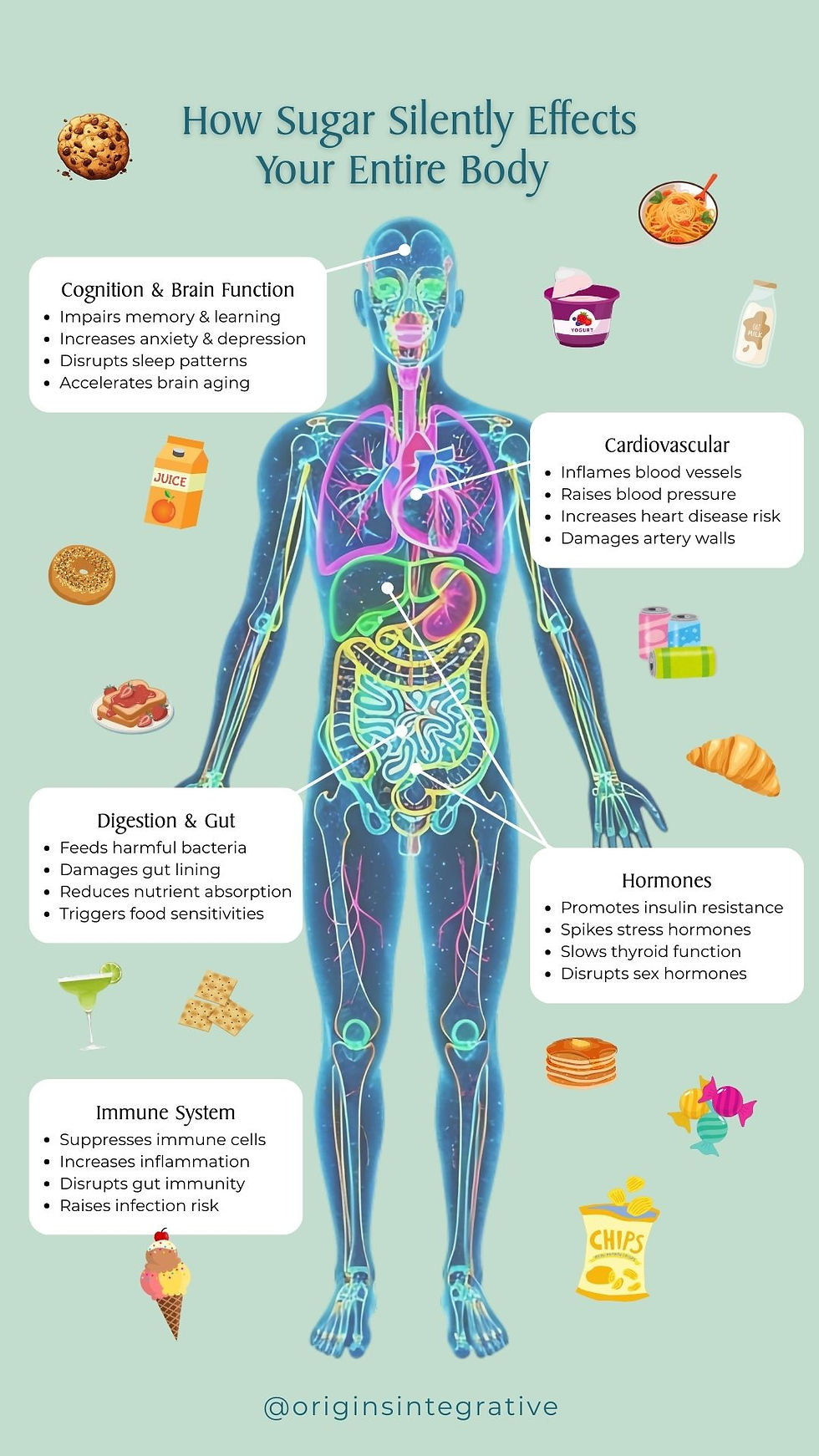
Cardiovascular Disease: Sugar promotes the oxidation of LDL cholesterol, making it more likely to stick to artery walls. It also increases triglycerides and blood pressure—a perfect storm for heart disease.
Autoimmune Conditions: That persistent inflammation can trigger your immune system to attack healthy tissue, potentially contributing to conditions like rheumatoid arthritis, lupus, and inflammatory bowel disease.
Accelerated Aging: Sugar literally ages you from the inside out through a process called glycation, where sugar molecules bind to proteins and create advanced glycation end products (AGEs). These damaged proteins contribute to wrinkles, joint stiffness, and organ dysfunction.
Your Brain on Sugar: More Than Just a Sweet Tooth
Perhaps most concerning is sugar's impact on your brain. Research shows that high sugar intake can:
Impair memory and learning by disrupting the formation of new neural pathways
Increase anxiety and depression risk through inflammatory pathways and neurotransmitter imbalances
Accelerate cognitive decline and potentially increase dementia risk
Disrupt sleep patterns by affecting cortisol and melatonin production
Think of sugar as creating static in your brain's communication network—everything becomes a little less clear, a little less efficient.
The Gut-Health Disruption
Your digestive system, home to 70% of your immune system, takes a direct hit from excess sugar. Sugar feeds harmful bacteria and yeast in your gut while starving beneficial microbes. This imbalance can lead to:
Digestive issues like bloating, gas, and irregular bowel movements
Compromised immune function and increased infection susceptibility
Mood disorders (remember, your gut is involved in producing key neurotransmitters like serotonin, GABA & dopamine)
Food sensitivities and allergic reactions
The Hormone Havoc
Sugar doesn't just affect insulin—it disrupts your entire hormonal orchestra:
Cortisol: Blood sugar swings trigger stress hormone release, keeping you in a state of chronic stress even when life is calm.
Sex Hormones: High insulin levels can disrupt testosterone and estrogen balance, affecting everything from libido to menstrual cycles.
Leptin: This "fullness" hormone becomes less effective, making it harder to recognize when you're satisfied.
Thyroid Hormones: Sugar can interfere with thyroid function, slowing your metabolism and affecting energy production.
Breaking Free: Your Path Forward
Your body is remarkably resilient. When you reduce sugar intake, you can often see improvements in energy, mood, and inflammation markers within weeks.
Here's how to start:
Begin with awareness: Read labels and identify hidden sugars in processed foods. Sugar hides under dozens of names—high fructose corn syrup, agave nectar, rice syrup, and even "healthy" options like coconut sugar still trigger these same physiological responses.
Focus on whole foods: Choose foods that don't come with ingredient lists—vegetables, fruits, nuts, seeds, lean proteins, and whole grains provide sustained energy without the metabolic chaos.
Avoid artificial sweeteners: Don't be fooled by "zero calorie" alternatives. Research shows that artificial sweeteners like aspartame, sucralose, and saccharin can disrupt your gut microbiome and actually promote glucose intolerance—the very problem you're trying to avoid. These synthetic sweeteners may also trigger insulin responses similar to regular sugar, keeping you trapped in the same metabolic dysfunction. Instead, when you need sweetness, choose small amounts of natural options like liquid stevia, 1/2 tsp of raw honey or simply retrain your palate to appreciate less sweetness overall.
Support your transition: Consider natural supplements like chromium, berberine & alpha lipolic acid for blood sugar balance, omega-3 fatty acids for inflammation, and probiotics to restore gut health. B-vitamins and magnesium can help with energy and mood during the transition.
Practice patience: Your taste buds and brain chemistry will adapt. Most patients find that within 2-3 weeks, they genuinely crave sugar less and appreciate the natural sweetness in whole foods more.
The Bigger Picture
Understanding sugar's full impact empowers you to make informed choices. This isn't about perfection or never enjoying a treat again—it's about recognizing that what you eat affects how you feel, think, and age at the cellular level.
Your body is constantly working to maintain balance and health. By reducing your sugar & starchy carb intake, you're supporting every system in your body, from your cardiovascular health to your brain function to your ability to fight off infections.
Download our helpful handout:
Remember, every small change matters. Each time you choose water over soda, berries over cookies, or whole foods over processed options, you're investing in your long-term health and vitality.
Your future self—with stable energy, clear thinking, and vibrant health—will thank you for the choices you make today.
Ready to take control of your health? Schedule a consultation to create a personalized plan for optimizing your wellbeing. Your journey to better health starts with understanding how your body works—and giving it what it needs to thrive.
Resources:


Comments